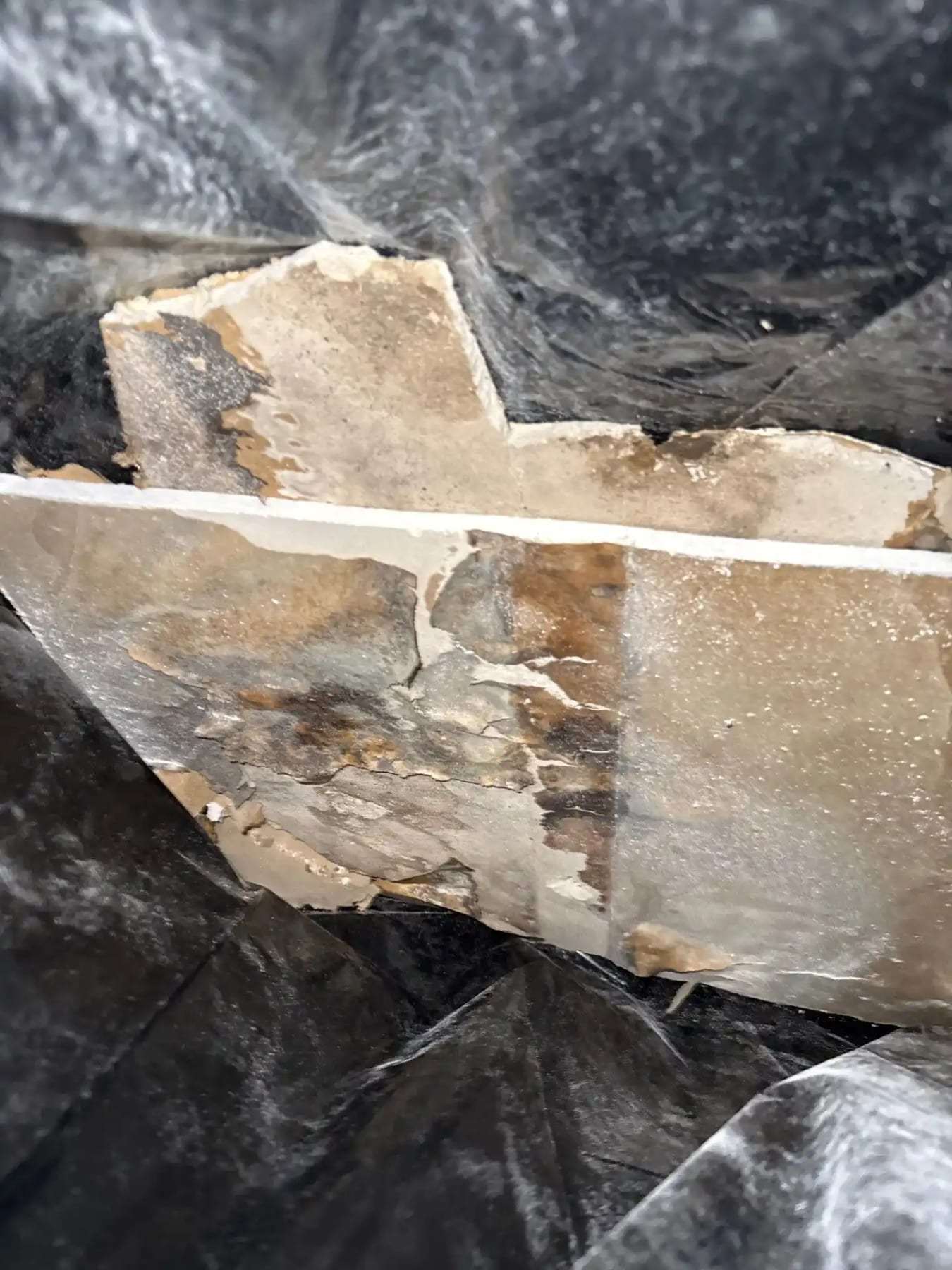
Piece of mold-stained ceiling drywall pulled away from the framing. Example of the work involved; the photo does not show a specific property or a job for this site.
What bleach does and does not do
Household bleach is mostly water with a small percentage of sodium hypochlorite. On hard, non-porous surfaces like glass, tile or a bathtub, it can kill surface mold and remove staining. Drywall paper, wood studs, carpet backing and ceiling tiles are porous, and mold grows into them, not just on them.
When bleach is sprayed on porous material, the chlorine tends to stay near the surface while the water soaks in. The visible spot may fade, but growth inside the material remains, and the extra water can help it return. Bleaching also removes the visual evidence a contractor or assessor would use to judge how far the problem extends.
Public health guidance generally focuses on removing mold and fixing moisture rather than killing it in place. Dead mold can still contain allergens, so physical removal is the goal.
Surfaces where cleaning works, and where removal is better
| Cleanable surfaces | Remove and replace |
|---|---|
| Glazed tile, glass, porcelain and metal | Drywall with growth on the paper or back face |
| Sealed countertops and vinyl window frames | Carpet pad and most carpet after prolonged wetting |
| Painted concrete with surface spotting only | Ceiling tiles and fiberglass insulation |
| Solid wood framing with surface growth, cleaned and dried under proper controls | Particleboard that has swollen |
A better approach for small, surface spots
Small means roughly the size of a doormat or less, on a surface that can be cleaned, with the moisture cause already fixed.
Protect yourself
Wear gloves, eye protection and a well-fitting N95 respirator. Keep others out of the room.
Avoid stirring it up
Lightly mist the area before cleaning to keep spores from becoming airborne. Do not dry-brush.
Clean with detergent and water
Scrub hard surfaces with a household detergent solution and a disposable cloth.
Dry thoroughly
Dry the surface completely and keep watching it for the next few weeks.
Bag the waste
Seal cloths and gloves in a plastic bag before carrying them through the house.
Stop and call for an assessment if
- The area is larger than a few square feet
- The growth is on drywall, insulation or carpet rather than a hard surface
- It came back after you cleaned it once
- It followed sewage or flood water
- Anyone in the home has asthma, a weakened immune system or a respiratory illness
General information for Highlands Ranch, not a quote or professional advice. In an emergency, call 911.